Most things that are worth eating take longer than we expect.
Ghee — real ghee, made the traditional way — takes two days. Not two days of constant work. Two days of patience. Of letting milk become something else at its own pace, in its own time, with only a little help from human hands at the right moments.
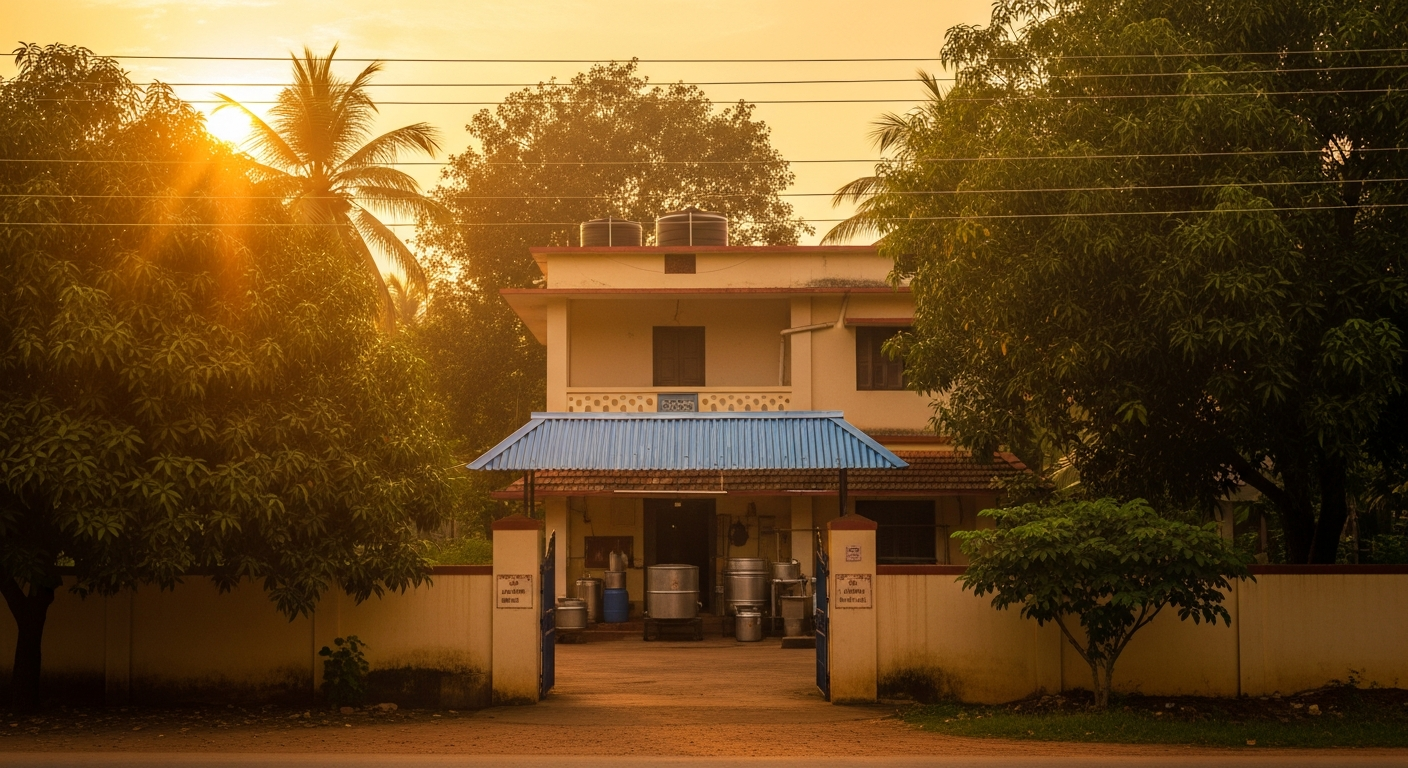
This is how we make Nand Gokul Ghee in Tanuku, West Godavari. It is the same process we have used since the 1960s. Not because we haven't heard of modern methods. Because this one works.
Step One — The Milk
Everything begins here. Fresh buffalo or cow milk, collected and brought to the facility. The quality of the ghee is already being decided at this step — what the animal ate, how the milk was handled, how fresh it is when it arrives.
There is no recovering a poor start in ghee-making. The milk is the foundation. If it is good, what follows can be good. If it is not, no amount of careful processing will fix it.
This is why the sourcing is not incidental. It is the first act of making ghee.
Step Two — The Cream
The milk is heated and then allowed to cool slowly. As it cools, the cream rises to the surface. This is collected — carefully, consistently — over time. Not rushed, not mechanically separated at high speed. Allowed to rise on its own.
The cream that collects this way retains more of the milk's natural character. The fat is intact. The flavour compounds are intact. The cream smells faintly of the milk it came from — warm, slightly sweet, alive.
This cream is what the butter will be made from. And the butter is what the ghee will be made from. Every step carries the last one forward.
Step Three — The Curd and the Churning
The cream is cultured — a small amount of live yogurt is introduced, and the cream is left overnight to ferment gently. By morning it has thickened, turned slightly tangy, transformed.
Before dawn — and this timing is not romantic invention, it is practical; the air is cool, the fat behaves better, the butter forms more cleanly — the curd is hand-churned. A churning vessel, a rope or handle, and sustained rhythmic motion. The fat begins to separate from the liquid. White butter collects and rises.
This is the moment the ghee-maker is working toward. When the butter separates cleanly, floating in pale buttermilk, the churning is done.
The buttermilk that remains is not discarded. In a traditional facility it has its own uses — drunk, used in cooking, returned to the process. Nothing is wasted.
Step Four — The Simmer
The white butter goes into a wide, heavy vessel over a low flame. This is the step that requires the most attention and the least interference.
As the butter heats, it begins to bubble — water evaporating, milk solids separating and sinking. The liquid clarifies. The colour shifts from pale white to a warm, translucent gold. The smell changes — from butter to something deeper, nuttier, more complex.
The person tending the flame watches for specific signs. The bubbling changes character. The solids at the bottom turn a particular shade. The aroma reaches a particular note. These are not measurements you can put on an instrument. They are things you learn by standing at that flame, in that facility, for years.
When the moment comes, the heat is removed. The ghee is done.
Step Five — The Ghee
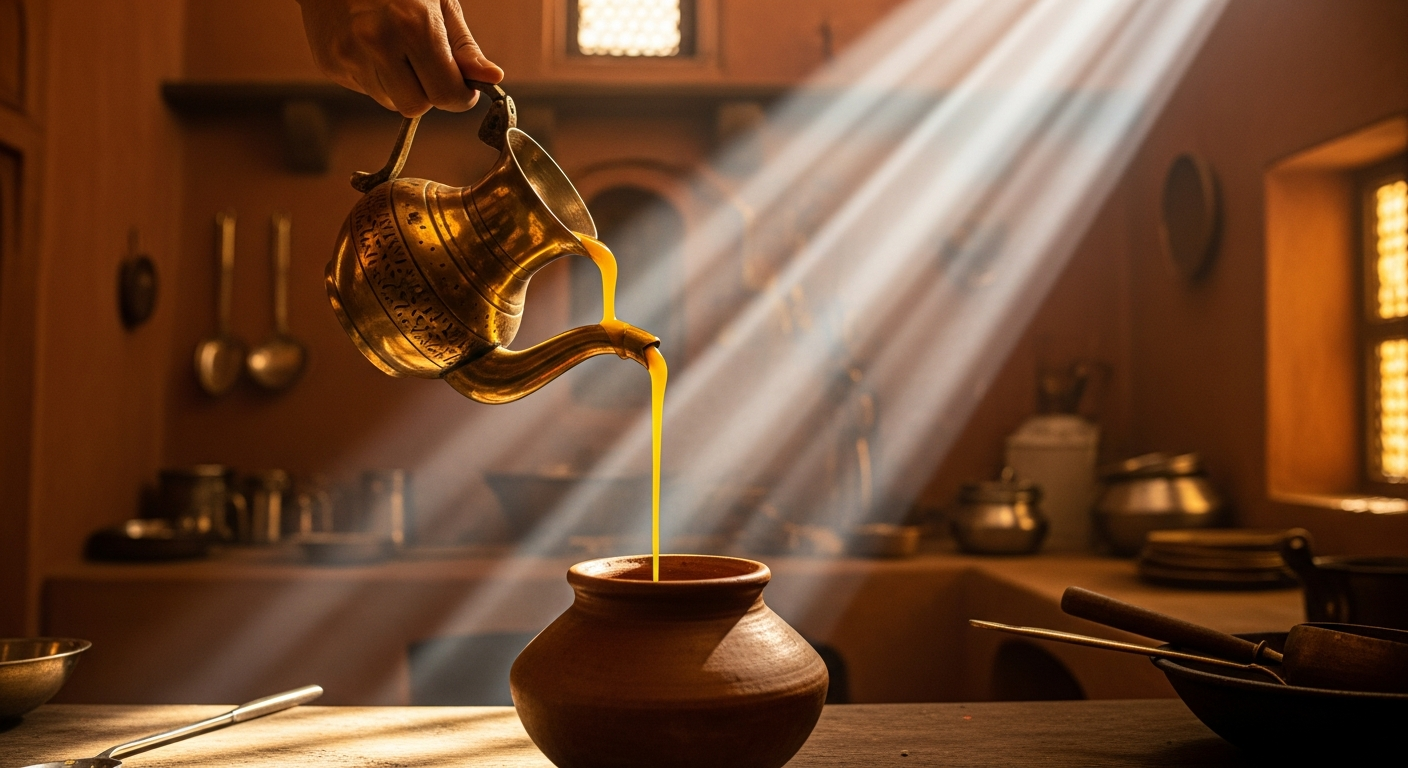
The clarified ghee is strained to remove the milk solids. What remains is pure — nearly 99.7 percent fat, no water, no milk protein, no lactose. It is poured into jars and pouches while still warm, sealed, and allowed to cool.
As it cools it may turn slightly grainy or develop a crystalline texture — this is normal in traditionally made ghee and is actually a sign of purity. Commercial ghee is often processed further to prevent this, to make it look smoother on a shelf. We leave ours as it is.
What you open is the result of two days, five steps, and sixty years of knowing when each step is complete.
Why the traditional method still matters
The industrial alternative is faster. Cream is centrifuged from milk at high speed. Butter is churned mechanically in minutes. Ghee is produced in continuous-flow systems that never stop.
The output is consistent. It is shelf-stable. It is ghee, technically.
But somewhere in the speed, something is lost. The slow culturing overnight. The hand-churning before dawn. The patient simmer watched by someone who knows what they are looking for. These are not inefficiencies. They are the process.
The ghee that comes from them tastes different. Not better in a way that is easy to argue. Better in a way that is easy to remember.
Nand Gokul Ghee has been made this way in West Godavari since the 1960s. Find our buffalo and cow ghee variants on the Shop page, learn more about our heritage, or read our guide to buffalo ghee vs cow ghee.